Ada Lovelace Day: women in technology I admire
Tuesday, March 24th, 2009Today is Ada Lovelace day and alongside a lot of other people I pledged to write a blog post about a woman in technology I admire.
I’ve thought long and hard about who to write about on this occasion and I thought it not enough to talk about a single woman in this post. Instead I will give a list of women that inspired me and I had the privilege to work with in the past and now.
Jeri Ellsworth
 First up is an inspiration of mine, Jeri Ellsworth a female alpha geek who built the Commodore One – a reverse engineered Commodore 64:
During development, it evolved into a re-configurable computer, a new class of computers where the chips do not have dedicated tasks any more. The two main chips carry out different tasks, depending on the needs of the program. The technology used is called FPGA - field programmable gate arrays. These chips can be programmed to do the tasks that the chips of the C-64 or other computers have done. It’s no emulation, but it’s a re-implementation of the chips that are no longer available since many years.
Try to out-geek that, boys!
Nicole Sullivan
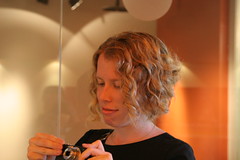 I’ve talked earlier here about Nicole Sullivan and I have to repeat myself in saying that I am very inspired by her work with CSS and taking it to a new, technical level rather than getting lost in creating pretty things using this technology.
Working with Nicole is a joy as she is very outspoken, loves to stand her ground and bring up very good reasons for her course of action but also listens to you when you throw a spanner in her works. She presents very well at conference in English and French and in general is a very pragmatic and interesting person to have to throw ideas around.
Sophie Major
 Sophie is my counterpart in the dynamic duo that is the Yahoo Developer Network outside the US. As such, she helped me get and do a job that is my passion and makes me not realize that I am working while I am clocking a lot of hours bringing Yahoo goodness to the people. I’ve covered Sophie in detail on the Ada Lovelace blog post on the Yahoo Developer Network blog so head on over there for more details.
Meltem Kogelbauer
 I have worked with Meltem in my previous company, Netdecisions (now Agilisys) and seen her move from being a web developer to becoming a manager/architect in a short period of time. She is amazingly fast at taking up new technologies and ideas and validating them before coming up with a great new way of looking at them. What impresses me most about Meltem is that she is a fighter. When one of her absolutely adoring daughters died of cancer she took on the challenge and started a charity that tries to help parents in the same situation and raise awareness of how this special kind of cancer can be battled. You can find all the information about this charity and her sterling work in this area at Monty’s Corner.
Cindy Li
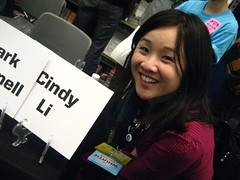 If you spend some time going to conferences about web design, you’ll be hard pushed not to come across Cindy Li sooner or later.
Cindy is not only a great designer but first and foremost a good spirit of the conference circuit. If there is some volunteering to do, if you need someone who knows everyone and has an open ear and friendly smile that is not glued on, Cindy is your woman.
A very pragmatic designer with a great eye for CI and wonderful humour (I has an open oAuth kitten) she partners with the right people to build great looking and working sites rather than trying to do everything herself. Thanks for being around, Cindy!
Emily Lewis
 I’ve run into Emily for the first time at webmaster jam session in Atlanta last year which is almost a crime. This lady has been developing web sites for almost as long as I have and has a tremendous insight into what makes sense to use and what doesn’t.
When we met she was up in arms about forcing people to follow web standards or GTFO. A few chats later I managed to convince her to use this tremendous knowledge and charms for good and catch flies with honey rather than vinegar and now she’s getting more and more traction and just started writing a book explaining microformats for mortals. You go girl!
Niqui Merret
 Niqui Merret is a fighter for accessibility in the world of flash development. This makes her amazing and rare enough but when you meet her and see the enthusiasm she puts into driving her cause forward there is no way you can avoid being dragged along.
Fresh in thought, outspoken a,d technically very knowledgable niqui represents a rare mediator between the fancy world of flash and the more down to earth world of web standards. Together these two worlds can create amazing products which is why having her around is priceless.
Cathy Ma
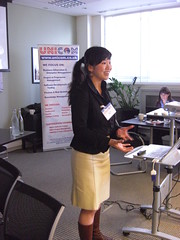 Cathy Ma arrived in the London office of Yahoo and took the place by storm. With a background of herding cats at Wikipedia her passion and deep knowledge lies in building, fostering and caring for online communities. Her positive attitude is contagious and not even the vast challenge of herding Yahoo groups and Answers made her despair.
As developers we always forget that large groups of users mean a lot of work and that ‘our community will moderate itself’ is largely a dream and far from reality. If you have bundles of positive energy like Cathy to rely on to tackle this job, you come out laughing.
Stephanie Troeth
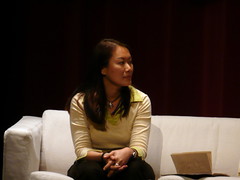 From the first moment I met Stephanie Troeth I was mesmerized. Her dedication to make the web a better place for all, her focus on teaching good practices from the get-go and her work for the WaSP is admirable.
Furthermore, she does it all with a sweet and very calm and understanding disposition that I’d love to have from time to time. Stephanie is one of the unsung superstars of the web standards movement and has a lot of great things to teach us.
She is also one of the warmest and most friendly people out there, technically very savvy and good at explaining complex matters in ways that people understand. A mix that is hard to find, thank you for being around, Steph!
Denise Stephens
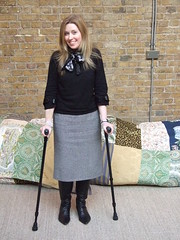 Denise Stephens is a wonderful example of someone who doesn’t take fate for granted but takes action to change things that seem immovable at first but mushroom into something wonderful if you take on the challenge.
Denise has MS and realized quickly that her life and surroundings are changing. However she was very unhappy with the current state of affairs and doesn’t agree that just because of your body having new needs that your flat should look like a hospital.
Therefore she started enabled by design, a self-help site for people with MS and a showcase for functional and pretty living aids. She’s been recently featured in the guardian
and ebd is going to be a great resource bridging the gap between product design and accessibility. And for that and the fact that she makes me feel terribly good when we meet for coffee I admire her.
Antonia Hyde
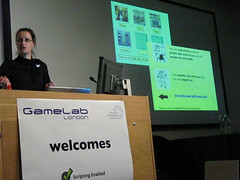 Antonia Hyde is a non-technical project manager who tries very hard to make the accessibility world understand the power of technology. She also pushes the envelope of the accessibility world by advocating for support of learning disabled users instead of thinking to cater primarily for blind users. Her wish-list of a video player for learning disabled users presented at Accessibility 2.0 last year inspired me to develop Easy YouTube and we’ve been working on more and more ideas like that over the following month. Antonia knows she is a mediator between people who need technical help and geeks that can give technical help and she does a great job doing that.
Kath Moonan
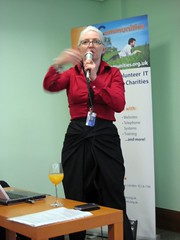 I love Lucy meets the full monty – that’s Kath Moonan. The visuals give a first clue, and as soon as the Liverpool accent and the lack of hindering filters kicks in you know this is a lady you can’t mess around with. Kath works for Abilitynet, organized the Ability2.0 conference and in general is a refreshingly outspoken specimen of the accessibility world.
Kath is not the most technical but once she gets excited about a solution there is no stopping her advocating it and telling others that their outdated solutions are for museums.
We need more forces of nature in accessibility, so thanks for being here, Kath!
Jenny Donnelly
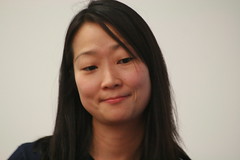 Jenny is part of the Yahoo User Interface library and does things full of awesome like the data table and the data source utility. She is also an evangelist for the YUI and does a tremendous job advocating it to developers out there.
What I admire most about Jenny is her attention to detail and willingness to add changes to the things she developed. She is also very patient with code and data structures, something that drives me nuts as I am much more happy to build things that create interfaces and interactivity.
Jenny is also a force of nature when it comes to organizing company internal front-end meetings and conference, something I am very thankful for. It is great to have her as a part of the YUI team.
And there are many many more
This is just a small sample of the female techies I work with that make me love my job. I wrote all of this on the blackberry so I stayed brief. I am sure that the female numbers in tech are rising and I’d say it is high time for this. The more diversified our workplaces are the better our products will become.
