Christian Heilmann

Author Archive

The things browsers can do – SAE Alumni Conference, Berlin 2014

Saturday, October 25th, 2014

Two days ago I was in Berlin for a day to present at the SAE alumni Conference in Berlin, Germany. I knew nothing about SAE before I went there except for the ads I see on the Tube in London. I was pretty amazed to see just how big a community the alumni and chapters of this school are. And how proud they are.

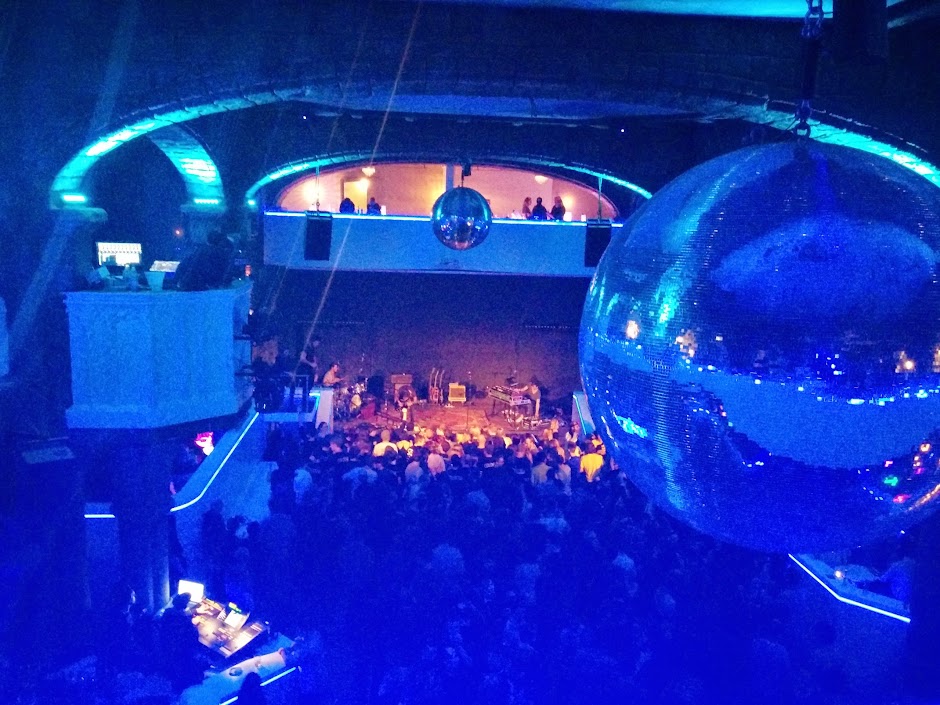
SAE Afterparty

My presentation The things browsers can do – go play with the web was a trial-run of a talk I will re-hash a bit at a few more conferences to come.

In essence, the thing I wanted to bring across is that HTML5 has now matured and is soon a recommendation.

And along the way we seem to have lost the excitement for it. One too many shiny HTML5 demo telling us we need a certain browser to enjoy the web. One more polyfill and library telling us without this extra overhead HTML5 isn’t ready. One more article telling us just how broken this one week old experimental implementation of the standard is. All of this left us tainted. We didn’t believe in HTML5 as a viable solution but something that is a compilation target instead.

Techno nightmare by @elektrojunge

In this talk I wanted to remind people just how much better browser support for the basic parts of HTML5 and friends is right now. And what you can do with it beyond impressive demos. No whizzbang examples here, but things you can use now. With a bit of effort you can even use them without pestering browsers that don’t support what you want to achieve. It is not about bringing modern functionality to all – browsers; it is about giving people things that work.

I recorded a screencast and put it on YouTube

The slides are on Slideshare.

The things browsers can do! SAE Alumni Convention 2014 from Christian Heilmann

All in all I enjoyed the convention and want to thank the organizers for having me and looking after me in an excellent fashion. It was refreshing to meet students who don’t have time to agonize which of the three task runners released this week to use. Instead who have to deliver something right now and in a working fashion. This makes a difference

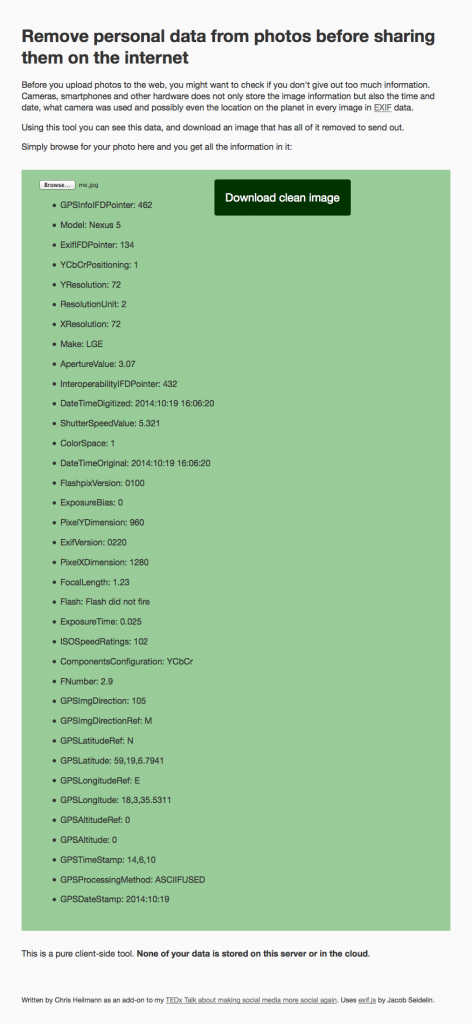
Removing private metadata (geolocation, time, date) from photos the simple way: removephotodata.com

Tuesday, October 21st, 2014

When you take photos with your smartphone or camera it adds much more to the image than meets the eye. This EXIF data contains all kind of interesting information: type of device, flash on or off, time, date and most worrying – geographical location. Services like Flickr or Google Plus use this data to show your photos on a map, which is nice, but you may find yourself in situations where you share images without wanting to tell the recipient in detail where and when they were taken.

For example the photo of me here:

christian heilmann, not sure about the shirt

Doesn’t only tell you that I am not sure about this shirt, but also the following information:

  • GPSInfoIFDPointer: 462
  • Model: Nexus 5
  • ExifIFDPointer: 134
  • YCbCrPositioning: 1
  • YResolution: 72
  • ResolutionUnit: 2
  • XResolution: 72
  • Make: LGE
  • ApertureValue: 3.07
  • InteroperabilityIFDPointer: 432
  • DateTimeDigitized: 2014:10:19 16:06:20
  • ShutterSpeedValue: 5.321
  • ColorSpace: 1
  • DateTimeOriginal: 2014:10:19 16:06:20
  • FlashpixVersion: 0100
  • ExposureBias: 0
  • PixelYDimension: 960
  • ExifVersion: 0220
  • PixelXDimension: 1280
  • FocalLength: 1.23
  • Flash: Flash did not fire
  • ExposureTime: 0.025
  • ISOSpeedRatings: 102
  • ComponentsConfiguration: YCbCr
  • FNumber: 2.9
  • GPSImgDirection: 105
  • GPSImgDirectionRef: M
  • GPSLatitudeRef: N
  • GPSLatitude: 59,19,6.7941
  • GPSLongitudeRef: E
  • GPSLongitude: 18,3,35.5311
  • GPSAltitudeRef: 0
  • GPSAltitude: 0
  • GPSTimeStamp: 14,6,10
  • GPSProcessingMethod: ASCIIFUSED
  • GPSDateStamp: 2014:10:19

I explained that this might be an issue in the case of nude photos people put online in my TEDx talk on making social media social again and showed that there is a command line tools called EXIFtool that allows for stripping out this extra data. This article describes other tools that do the same. EXIFtool is the 800 pound gorilla of this task as it allows you to edit EXIF data.

As a lot of people asked me for a tool to do this, I wanted to make it easier for you without having to resort to an installable tool. Enter removephotodata.com

Remove photo data in action

This is a simple web page that allows you to pick an image from your hard drive, see the data and save an image with all the data stripped by clicking a button. You can see it in action in this screencast

Under the hood, all I do is use Jacob Seidelin’s EXIF.js and copy the photo onto a CANVAS element to read out the raw pixel data without any of the extra information. The source code is on GitHub.

The tool does not store any image data and all the calculations and information gathering happens on your computer. Nothing gets into the cloud or onto my server.

So go and drag and drop your images there before uploading them. Be safe® out there.

Why Microsoft matters more than we think

Sunday, October 19th, 2014

I’m guilty of it myself, and I see it a lot: making fun of Microsoft in a presentation. Sure, it is easy to do, gets a laugh every time but it is also a cheap shot and – maybe – more destructive to our goals than we think.

is it HTML5? if it doesn't work in IE, it is joke

Let’s recap a bit. Traditionally Microsoft has not played nice. It destroyed other companies, it kept things closed that open source could have benefited from and it tried to force a monoculture onto something that was born open and free: the web.

As standard conscious web developers, IE with its much slower adaption rate of newer versions was always the bane of our existence. It just is not a simple thing to upgrade a browser when it is an integral part of the operating system. This is exacerbated by the fact that newer versions of Windows just weren’t exciting or meant that a company would have to spend a lot of money buying new software and hardware and re-educate a lot of people. A massive investment for a company that wasn’t worth it just to stop the web design department from whining.

Let’s replace IE then!

Replacing IE also turned out to be less easy than we thought as the “this browser is better” just didn’t work when the internal tools you use are broken in them. Chrome Frame was an incredible feat of engineering and – despite being possible to roll out on server level even – had the adoption rate of Halal Kebabs at a Vegan festival.

Marketing is marketing. Don’t try to understand it

It seems also fair to poke fun at Microsoft when you see that some of their marketing at times is painful. Bashing your competition is to me never a clever idea and neither is building shops that look almost exactly the same as your main competitor next to theirs. You either appear desperate or grumpy.

Other things they do

The thing though is that if you look closely and you admit to yourself that what we call our community is a tiny part of the overall market, then Microsoft has a massive part to play to do good in our world. And they are not cocky any longer, they are repentant. Not all departments, not all people, and it will be easy to find examples, but as a whole I get a good vibe from them, without being all marketing driven.

Take a look at the great tools provided at Modern.ie to allow you to test across browsers. Take a look at status.modern.ie which – finally – gives you a clear insight as to what new technology IE is supporting or the team is working on. Notice especially that this is not only for Explorer – if you expand the sections you get an up-to-date cross-browser support chart linked to the bugs in their trackers.

status of different web technologies provided by Microsoft

This is a lot of effort, and together with caniuse.com makes it easier for people to make decisions whether looking into a technology is already worth-while or not.

Reaching inside corporations

And this to me is the main point why Microsoft matters. They are the only ones that really reach the “dark matter” developers they created in the past. The ones that don’t read hacker news every morning and jump on every new experimental technology. The ones that are afraid of using newer features of the web as it might break their products. The ones that have a job to do and don’t see the web as a passion and a place to discuss, discard, hype and promote and troll about new technologies. And also the ones who build the products millions of people use every day to do their non-technology related jobs. The booking systems, the CRM systems, the fiscal data tools, all the “boring” things that really run our lives.

We can moan and complain about all our great new innovations taking too long to be adopted. Or we could be open to feeding the people who talk to those who are afraid to try new things with the information they need.

Let’s send some love and data

I see Microsoft not as the evil empire any longer. I see them as a clearing house to graduate experimental cool web technology into something that is used in the whole market. Chances are that people who use Microsoft technologies are also audited and have to adhere to standard procedures. There is no space for wild technology goose chases there. Of course, you could see this as fundamentally broken – and I do to a degree as well – but you can’t deny that these practices exist. And that they are not going to go away any time soon.

With this in mind, I’d rather have Microsoft as a partner in crime with an open sympathetic ear than someone who doesn’t bother playing with experimental open technology of competitors because these don’t show any respect to begin with.

If we want IT to innovate and embrace new technologies and make them industrial strength we need an ally on the inside. That can be Microsoft.

Evangelism conundrum: Don’t mention the product

Sunday, October 12th, 2014

Being a public figure for a company is tough. It is not only about what you do wrong or right – although this is a big part. It is also about fighting conditioning and bad experiences of the people you are trying to reach. Many a time you will be accused of doing something badly because of people’s preconceptions. Inside and outside the company.

The outside view: oh god, just another sales pitch!

One of these conditionings is the painful memory of the boring sales pitch we all had to endure sooner or later in our lives. We are at an event we went through a lot of hassle to get tickets for. And then we get a presenter on stage who is “excited” about a product. It is also obvious that he or she never used the product in earnest. Or it is a product that you could not care less about and yet here is an hour of it shoved in your face.

Many a time these are “paid for” speaking slots. Conferences offer companies a chance to go on stage in exchange for sponsorship. These don’t send their best speakers, but those who are most experienced in delivering “the cool sales pitch”. A product the marketing department worked on hard to not look like an obvious advertisement. In most cases these turn out worse than a – at least honest – straight up sales pitch would have.

I think my favourite nonsense moment is “the timelapse excitement”. That is when when a presenter is “excited” about a new feature of a product and having used it “for weeks now with all my friends”. All the while whilst the feature is not yet available. It is sadly enough often just too obvious that you are being fed a make-believe usefulness of the product.

This is why when you go on stage and you show a product people will almost immediately switch into “oh god, here comes the sale” mode. And they complain about this on Twitter as soon as you mention a product for the first time.

This is unfair to the presenter. Of course he or she would speak about the products they are most familiar with. It should be obvious when the person knows about it or just tries to sell it, but it is easier to be snarky instead of waiting for that.

The inside view: why don’t you promote our product more?

From your company you get pressure to talk more about your products. You are also asked to show proof that what you did on stage made a difference and got people excited. Often this is showing the Twitter time line during your talk which is when a snarky comment can be disastrous.

Many people in the company will see evangelists as “sales people” and “show men”. Your job is to get people excited about the products they create. It is a job filled with fancy hotels, a great flight status and a general rockstar life. They either don’t understand what you do or they just don’t respect you as an equal. After all, you don’t spend a lot of time coding and working on the product. You only need to present the work of others. Simple, isn’t it? Our lives can look fancy to the outside and jealousy runs deep.

This can lead to a terrible gap. You end up as a promoter of a product and you lack the necessary knowledge that makes you confident enough to talk about it on stage. You’re seen as a sales guy by the audience and as a given by your peers. And it can be not at all your fault as your attempts to reach out to people in the company for information don’t yield any answers. Often it is fine to be “too busy” to tell you about a new feature and it should be up to you to find it as “the documentation is in the bug reports”.

Often your peers like to point out how great other companies are at presenting their products. And that whilst dismissing or not even looking at what you do. That’s because it is important for them to check what the competition does. It is less exciting to see how your own products “are being sold”.

How to escape this conundrum?

Frustration is the worst thing you can experience as an evangelist.

Your job is to get people excited and talk to another. To get company information out to the world and get feedback from the outside world to your peers. This is a kind of translator role, but if you look deep inside and shine a hard light on it, you are also selling things.

Bruce Lawson covered that in his talk about how he presents. You are a sales person. What you do though is sell excitement and knowledge, not a packaged product. You bring the angle people did not expect. You bring the inside knowledge that the packaging of the product doesn’t talk about. You show the insider channels to get more information and talk to the people who work on the product. That can only work when these people are also open to this. When they understand that any delay in feedback is not only seen as a disappointment for the person who asked the question. It is also diminishing your trustworthiness and your reputation and without that you are dead on stage.

In essence, do not mention the product without context. Don’t show the overview slides and the numbers the press and marketing team uses. Show how the product solves issues, show how the product fits into a workflow. Show your product in comparison with competitive products, praising the benefits of either.

And grow a thick skin. Our jobs are tiring, they are busy and it is damn hard to keep up a normal social life when you are on the road. Each sting from your peers hurts, each “oh crap, now the sales pitch starts” can frustrate you. You’re a person who hates sales pitches and tries very hard to be different. Being thrown in the same group feels terribly hurtful.

It is up to you to let that get you down. You could also concentrate on the good, revel in the excitement you see in people’s faces when you show them a trick they didn’t know. Seeing people grow in their careers when they repeat what they learned from you to their bosses.

If you aren’t excited about the product, stop talking about it. Instead work with the product team to make it exciting first. Or move on. There are many great products out there.

Reconnecting at TEDxLinz – impressions, slides, resources

Saturday, September 27th, 2014

I just returned from Linz, Austria, where I spoke at TEDxLinz yesterday. After my stint at TEDxThessaloniki earlier in the year I was very proud to be invited to another one and love the variety of talks you encounter there.

TEDx_Linz_2014-5783

The overall topic of the event was “re-connect” and I was very excited to hear all the talks covering a vast range of topics. The conference was bilingual with German (well, Austrian) talks and English ones. Oddly enough, no speaker was a native English speaker.

TEDx_Linz_2014-5622

My favourite parts were:

  • Ingrid Brodnig talking about online hate and how to battle it
  • Andrea Götzelmann talking about re-integrating people into their home countries after emigrating. A heart-warming story of helping people out who moved out and failed just to return and succeed
  • Gergely Teglasy talking about creating a crowd-curated novel written on Facebook
  • Malin Elmlid of The Bread Exchange showing how her love of creating your own food got her out into the world and learn about all kind of different cultures. And how doing an exchange of goods and services beats being paid.
  • Elisabeth Gatt-Iro and Stefan Gatt showing us how to keep our relationships fresh and let love listen.
  • Johanna Schuh explaining how asking herself questions about her own behaviour rather than throwing blame gave her much more peace and the ability to go out and speak to people.
  • Stefan Pawel enlightening us about how far ahead Linz is compared to a lot of other cities when it comes to connectivity (150 open hot spots, webspace for each city dweller)

The location was the convention centre of a steel factory and the stage setup was great and not over the top. The audience was very mixed and very excited and all the speakers did a great job mingling. Despite the impressive track record of all of them there was no sense of diva-ism or “parachute presenting”.
I had a lovely time at the speaker’s dinner and going to and from the hotel.

The hotel was a special case in itself: I felt like I was in an old movie and instead of using my laptop I was tempted to grow a tufty beard and wear layers and layers of clothes and a nice watch on a chain.

hotel room

My talk was about bringing the social back into social media or – in other words – stopping to chase numbers of likes and inane comments and go back to a web of user generated content that was done by real people. I have made no qualms about it in the past that I dislike memes and animated GIFs cropped from a TV series of movie with a passion and this was my chance to grand-stand about it.

I wanted the talk to be a response to the “Look up” and “Look down” videos about social oversharing leading to less human interaction. My goal was to move the conversation into a different direction, explaining that social media is for us to put things we did and wanted to share. The big issue is that the addiction-inducing game mechanisms of social media platforms instead lead us to post as much as we can and try to be the most shared instead of the creators.

This also leads to addiction and thus to strange online behaviour up to over-sharing materials that might be used as blackmail opportunities against us.

My slides are on Slideshare.

Re/Connect – Putting the social back into social media (TEDx Linz) from Christian Heilmann

Resources I covered in the talk:

Other than having a lot of fun on stage I also managed to tick some things off my bucket list:

TEDx_Linz_2014-5792

  • Vandalising a TEDx stage
  • Being on stage with my fly open
  • Using the words “sweater pillows” and “dangly bits” in a talk

I had a wonderful time all in all and I want to thank the organisers for having me, the audience for listening, the other speakers for their contribution and the caterers and volunteers for doing a great job to keep everybody happy.

TEDx_Linz_2014-5806