So machen’s andere – Computer fur Behinderte
Der Computer Club Graz schreibt für den C 64 Programme, die Behinderten das Leben erleichtern. Mit der Symbolsprache Bliss ist fur Behinderte sogar ein Schreiben von Briefen moglich.
Jeder, der ein körperliches Gebrechen hat oder geistig behindert ist, paßt nicht in unsere gesellschaftliche Norm. Eine Norm, die willkürlich von der Mehrzahl der Menschen bestimmt wird. Von uns allen!
Das Schicksal tausender Mitbürger kann jeden von uns treffen, ein (schuldloser) Unfall, eine heimtückische Krankheit oder ein von Geburt an behindertes Kind. Was in Amerika und Kanada selbstverständlich ist, ist bei uns Zukunftshoffnung einer Minderheit. Sie wollen kein Mitleid, keine milden Gaben, sie wollen Integration in allen Lebensbereichen. Eine abgerundete Bordsteinkante, ein rollstuhlfähiges (Amts-) Gebäude sind nur kleine Beispiele. Viele könnten vollwertige Arbeits kollegen sein, mit etwas gutem Willen und behindertengerechten Arbeitsplätzen. Es gibt ein paar Ansätze in dieser Richtung, doch sind elektronische Spezialanfertigungen so teuer, daß schon allein der Preis Planungen zunichte macht.
Im Juni 1985 begannen Mitglieder des Computer Club Graz, zusammen mit Lehrerinnen der “Landessonderschule für körperbehinderte und mehrfach behinderte Kinder”, die internationale nonverbale Kommunikationssprache “Bliss” auf Computer umzusetzen. Bliss wird nicht verbal gesprochen, sondern bildlich dargestellt und gezeigt. Menschen mit cerebralen Lähmungen, die nicht sprechen können, haben keine Möglichkeit, sich aktiv an Gesprächen zu beteiligen. Kommunikation beschränkt sich auf das Stellen von Fragen wie “Willst Du essen?” oder “Willst Du trinken«, in Zusammenhang mit Zustimmungs- beziehungsweise Ablehnungsgesten. Gefühle können überhaupt nicht genauer artikuliert werden. Die Symbolsprache Bliss wurde vom Österreicher Karl Blitz (Charles Bliss) bereits 1949 entwickelt und seit 1975 vom “Blissymbolics Communication Institute” des “Ontario Crippled Children’s Cen-tre”, Kanada, weltweit verbreitet. Die Zeichen sind etwa mit dem Prinzip der chinesischen Schriftbildsymbole zu vergleichen. Sie sind aus einer geringen Anzahl von Einzelelementen zusammengesetzt und so logisch aufgebaut, daß sie leicht im Gedächtnis behalten werden können. Um es auch Symbolunkundigen zu ermöglichen, die Bedeutung zu verstehen, ist unter jedem Begriff die Übersetzung geschrieben. So wird aus dem Zeichen “Mann” und “Schutz” der “Vater”, der “Rock” macht das Zeichen zur “Frau” und weiter zur “Mutter”. Obwohl die Sprache etwas holprig klingt, werden die Anwender zu einer grammatikalischen Sprache geführt, was durch die syntaxgemäße Anordnung der Symbole auf der Tafel und ihre unterschiedliche Färbung erreicht wird. Zeitwörter werden grün, Hauptwörter rot, Eigenschaftswörter blau dargestellt. Für viele Kinder oder auch Unfallopfer ist das die erste Möglichkeit, sich zu artikulieren. Sei es nun, daß sie mit der Hand oder einem Kopfstab auf das entsprechende Symbol deuten, wobei diese Art der Kommunikation aber immer an die Anwesenheit einer Kontaktperson gebunden ist, die die Zeichen interpretieren muß. Diese Kontaktperson muß auch das Schreiben von Briefen übernehmen.
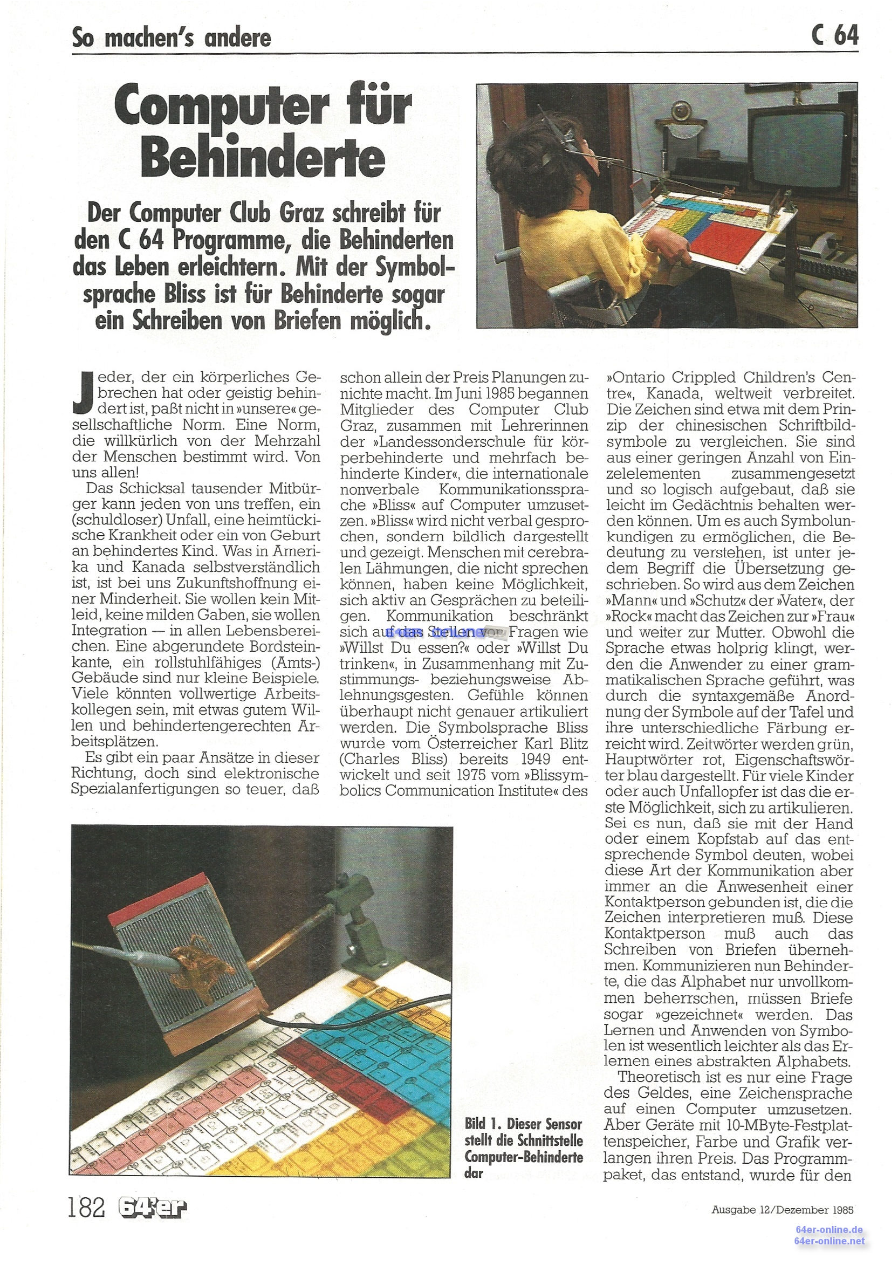
Bild 1. Dieser Sensor stellt die Schnittstelle Computer Behinderte dar
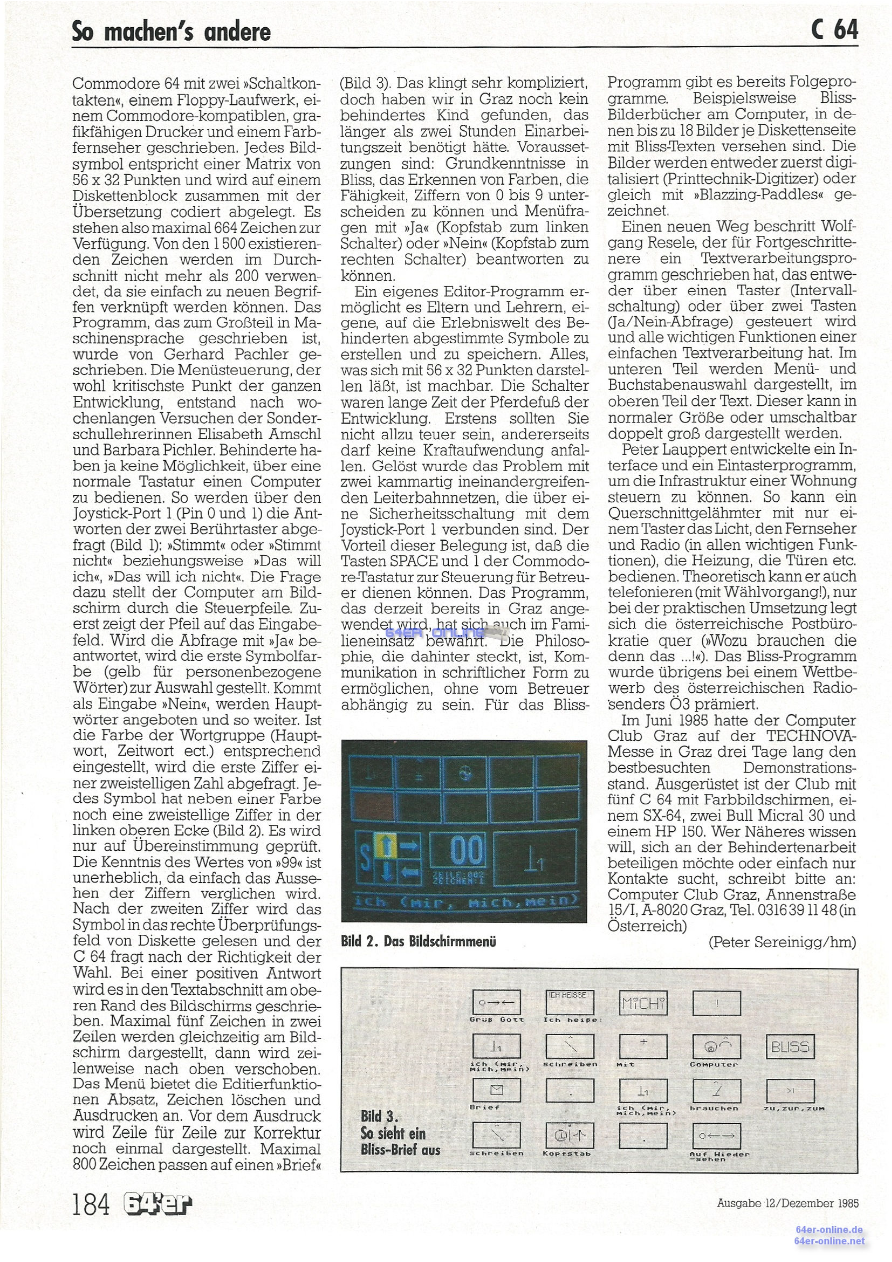
Kommunizieren nun Behinderte, die das Alphabet nur unvollkommen beherrschen, müssen Briefe sogar gezeichnet werden. Das Lernen und Anwenden von Symbo- len ist wesentlich leichter als das Erlernen eines abstrakten Alphabets. Theoretisch ist es nur eine Frage des Geldes, eine Zeichensprache auf einen Computer umzusetzen. Aber Geräte mit 10-MByte-Festplattenspeicher, Farbe und Grafik verlangen ihren Preis. Das Programmpaket, das entstand, wurde für den Commodore 64 mit zwei “Schaltkontakten”, einem Floppy-Laufwerk, einem Commodore-kompatiblen, grafikfähigen Drucker und einem Farbfernseher geschrieben. Jedes Bildsymbol entspricht einer Matrix von 56×32 Punkten und wird auf einem Diskettenblock zusammen mit der Übersetzung codiert abgelegt. Es stehen also maximal 664 Zeichen zur Verfügung. Von den 1500 existieren den Zeichen werden im Durch schnitt nicht mehr als 200 verwen det, da sie einfach zu neuen Begriffen verknüpft werden können. Das Programm, das zum Großteil in Maschinensprache geschrieben ist, wurde von Gerhard Pachler geschrieben. Die Menüsteuerung, der wohl kritischste Punkt der ganzen Entwicklung, entstand nach wo- chenlangen Versuchen der Sonderschullehrerinnen Elisabeth Amschl und Barbara Pichler. Behinderte haben ja keine Möglichkeit, über eine normale Tastatur einen Computer zu bedienen. So werden über den Joystick-Port 1 (Pin 0 und 1) die Antworten der zwei Berührtaster abgefragt (Bild 1); “Stimmt” oder “Stimmt nicht” beziehungsweise “Das will ich”, “Das will ich nicht”. Die Frage dazu stellt der Computer am Bildschirm durch die Steuerpfeile. Zuerst zeigt der Pfeil auf das Eingabefeld. Wird die Abfrage mit “Ja” be antwortet, wird die erste Symbolfarbe (gelb für personenbezogene Wörter) zur Auswahl gestellt. Kommt als Eingabe “Nein”, werden Hauptwörter angeboten und so weiter. Ist die Farbe der Wortgruppe (Hauptwort, Zeitwort ect.) entsprechend eingestellt, wird die erste Ziffer einer zweistelligen Zahl abgefragt. Jedes Symbol hat neben einer Farbe noch eine zweistellige Ziffer in der linken oberen Ecke (Bild 2).
Es wird nur auf Übereinstimmung geprüft. Die Kenntnis des Wertes von “99” ist unerheblich, da einfach das Aussehen der Ziffern verglichen wird. Nach der zweiten Ziffer wird das Symbol in das rechte Überprüfungsfeld von Diskette gelesen und der C 64 fragt nach der Richtigkeit der Wahl. Bei einer positiven Antwort wird es in den Textabschnitt am oberen Rand des Bildschirms geschrieben. Maximal fünf Zeichen in zwei Zeilen werden gleichzeitig am Bildschirm dargestellt, dann wird zeilenweise nach oben verschoben. Das Menü bietet die Editierfunktionen Absatz, Zeichen löschen und wird Zeile für Zeile zur Korrektur noch einmal dargestellt. Maximal 800 Zeichen passen auf einen “Brief” Ausdrucken an. Vor dem Ausdruck (Bild 3). Das klingt sehr kompliziert, doch haben wir in Graz noch kein behindertes Kind gefunden, das länger als zwei Stunden Einarbeitungszeit benötigt hätte. Voraussetzungen sind: Grundkenntnisse in Bliss, das Erkennen von Farben, die Fähigkeit, Ziffern von 0 bis 9 unterscheiden zu können und Menüfragen mit »Ja« (Kopfstab zum linken Schalter) oder “Nein” (Kopfstab zum rechten Schalter) beantworten zu können.
Ein eigenes Editor-Programm ermöglicht es Eltern und Lehrern, eigene, auf die Erlebniswelt des Behinderten abgestimmte Symbole zu erstellen und zu speichern. Alles, was sich mit 56×32 Punkten darstellen läßt, ist machbar. Die Schalter waren lange Zeit der Pferdefuß der Entwicklung. Erstens sollten Sie nicht allzu teuer sein, andererseits darf keine Kraftaufwendung anfallen. Gelöst wurde das Problem mit zwei kammartig ineinandergreifenden Leiterbahnnetzen, die über eine Sicherheitsschaltung mit dem Joystick-Port 1 verbunden sind. Der Vorteil dieser Belegung ist, daß die Tasten SPACE und I der Commodore-Tastatur zur Steuerung für Betreuer dienen können. Das Programm, das derzeit bereits in Graz angewendet wird, au hat sich auch im Familiensinsatz bewährt. Die Philosophie, die dahinter steckt, ist, Kommunikation in schriftlicher Form zu ermöglichen, ohne vom Betreuer abhängig zu sein. Für das Bliss-Programm gibt es bereits Folgeprogramme. Beispielsweise Bliss-Bilderbücher am Computer, in de nen bis zu 18 Bilder je Diskettenseite mit Bliss-Texten versehen sind. Die Bilder werden entweder zuerst digitalisiert (Printtechnik-Digitizer) oder gleich mit “Blazzing-Paddles” gezeichnet.
Einen neuen Weg beschreibt Wolfgang Resele, der für Vortgeschritten ein Textverarbeitungsprogramm geschrieben hat das entweder über einen Taster (Intervallschaltung) oder über zwei Tasten (Ja/Nein-Abfrage) gesteuert wird und alle wichtigen Funktionen einer einfachen Textverarbeitung hat.
Im unteren Teil werden Menü- und Buchstabenauswahl dargestellt, im oberen Teil der Text. Dieser kann in normaler Größe oder umschaltbar doppelt groß dargestellt werden.
Peter Lauppert entwickelte ein Interface und ein Eintasterprogramm, um die Infrastruktur einer Wohnung steuern zu können. So kann ein Querschnittgelähmter mit nur einem Taster das Licht, den Fernseher und Radio (in allen wichtigen Funk-tionen), die Heizung, die Türen etc. bedienen. Theoretisch kann er auch telefonieren (mit Wählvorgang!), nur bei der praktischen Umsetzung legt sich die österreichische Postbürokratie quer (Wozu brauchen die denn das …!). Das Bliss-Programm wurde übrigens bei einem Wettbewerb des österreichischen Radio- senders Ö3 prämiert.
Im Juni 1985 hatte der Computer Club Graz auf der TECHNOVA Messe in Graz drei Tage lang den bestbesuchten Demonstrationsstand. Ausgerüstet ist der Club mit fünf C 64 mit Farbbildschirmen, einem SX-64, zwei Bull Micral 30 und einem HP 150. Wer Näheres wissen will, sich an der Behindertenarbeit beteiligen möchte oder einfach nur Kontakte sucht, schreibt bitte an: Computer Club Graz, Annenstraße 15/1, A-8020 Graz, Tel. 031639 11 48 (in Österreich).