A different approach to conference Q&A – Interviews
Thursday, July 21st, 2011 at 12:27 amA few weeks ago was Highland Fling, a conference in Scotland organised and run by a very enthusiastic person, Alan White. I spoke twice at that event in the past and one thing I loved most about it was how it handled the Q&A of the audience.
The issues with Q&A
After-talk Q&A is always a pain to get right. There are a few issues that keep cropping up:
- People are too afraid to ask a “probably stupid” question in front of the rest of the audience (funnily enough a lot of times this is the question a lot of others have but are as afraid to ask)
- People asking questions use the opportunity to profile themselves or their company/product instead of asking a valid question (thus wasting everybody’s time)
- Speakers and/or the audience can’t hear or understand the question (and speakers need to repeat it so it gets recorded/is heard by everybody thus using up even more time)
- Speakers can’t see the audience properly (lights in their eyes) which means some half-hearted requests don’t get recognised
- The people asking questions are asked to wait for the microphone to be comprehensible to everybody which takes up time (and not everybody knows how to handle a mic)
- Interesting questions at the beginning of the talk get forgotten halfway through
- Speakers get stuck answering one question or deviate rather than answering swiftly and getting more questions in
The Highland Fling way
The Fling does it differently: instead of having an open Q&A session after the talk the conference has a moderator who not only introduces the speakers but also does a 20 minute interview with them after the talk. Conference participants can tweet questions to the interviewer during the talk. This works around most of the issues mentioned earlier.
This year I was lucky enough to be the moderator/interviewer.
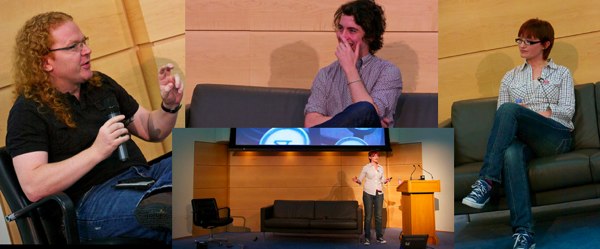 Original photos by Drew McLellan
As you may know, I have a background in radio where I spent a lot of time interviewing people on the phone and live. It was a lot of fun going back to that and especially interesting to have a mixed group of speakers all with different specialist topics to chat about.
Judging from the Twitter feedback at the conference I must have done a good job, and it was great to see speakers be more relaxed when they sit on a sofa and know some questions will come rather than hoping there are some.
I think more conferences should adopt this idea.
Tags: conferences, flingconf, highlandfling, interviewing, qanda